

How Long Does a Roof Replacement Take, Start to Finish?
Quick Answer
The installation itself usually takes one day, occasionally two for large, steep or complex roofs. The full project takes longer: roughly one to three weeks if you are paying out of pocket, and three to eight weeks if you are going through insurance. The insurance stage accounts for most of the difference, since adjuster scheduling, claim determination and supplement approvals are outside your contractor’s control.
The installation is usually one day. The project is usually three to six weeks.
Both numbers are accurate, and the gap between them is where most of the frustration in a roofing project lives. Homeowners are told “it’s a one-day job,” then find themselves a month out from the first phone call still waiting on materials or an adjuster.
Here is the realistic timeline for each stage, what moves it, and what install day actually looks like.
The Install Itself
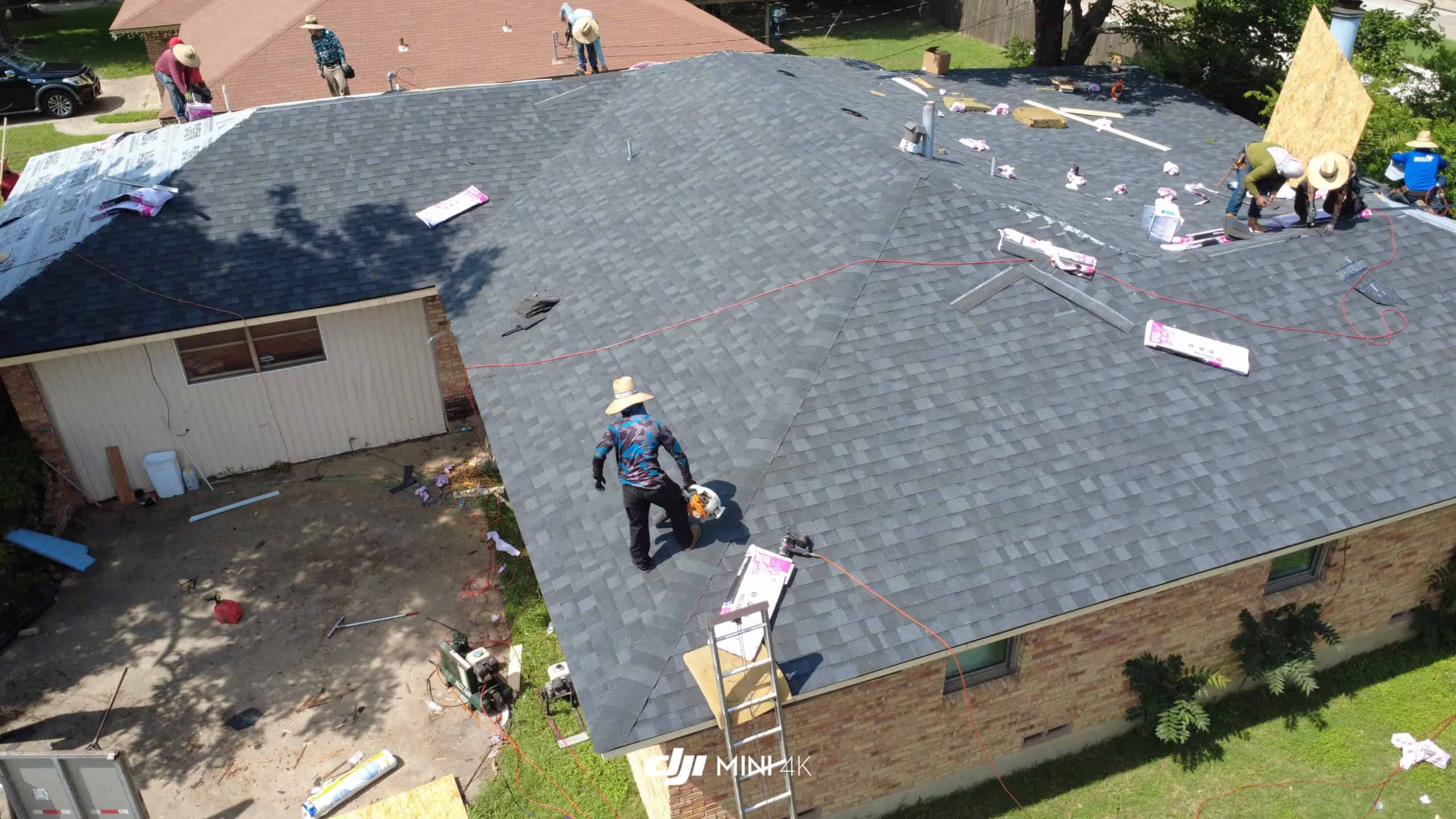
For a typical single-family home in Denton County, tear-off through final cleanup takes one day, occasionally two. What pushes it longer:
- Size. Beyond roughly 35 squares, a single day gets tight.
- Steep pitch. Harnesses and roof jacks slow everything down.
- Multiple existing layers. Two or three layers of old shingles means two or three times the tear-off and disposal.
- Significant decking damage discovered at tear-off.
- Complexity. Many valleys, dormers, chimneys and skylights mean far more flashing work, which is slow and detailed.
- Weather. A roof is never left open overnight, but rain mid-tear-off stops work and restarts it another day.
The Full Timeline, Stage by Stage
| Stage | Typical Duration | What Controls It |
|---|---|---|
| Inspection and estimate | 1 to 3 days | Scheduling and roof complexity |
| Insurance claim (if applicable) | 2 to 6 weeks | Adjuster availability, scope agreement, supplements |
| Contract, color and materials | 3 to 10 days | Shingle availability and permit processing |
| Scheduling | 3 days to 3 weeks | Season and storm backlog |
| Installation | 1 to 2 days | Size, pitch, complexity, weather |
| Final inspection and warranty | 1 to 7 days | Municipal inspection and paperwork |
Where the Time Actually Goes
The insurance stage is the big one, and it is almost entirely outside your contractor’s control. Filing the claim, waiting for adjuster assignment, scheduling the inspection, waiting on the determination, then reviewing the approved scope against what the roof actually needs. Gaps between the two require supplements, and supplements mean more back-and-forth. Timelines also stretch after a major regional storm, when every carrier in North Texas is processing claims at once.
Two things shorten it meaningfully. File quickly, since Texas claim deadlines run from the date of loss and evidence degrades, as covered in does insurance cover roof replacement in Texas. And have your roofer present at the adjuster inspection, because one thorough joint inspection beats three rounds of supplements.
Paying out of pocket skips this stage entirely, which is why cash projects often finish faster than insurance projects that started earlier.
Scheduling depends almost entirely on season. Late winter is usually quick. Spring and early summer after storms move through is the busy stretch, and lead times extend for every reputable company in the area. A company offering to start tomorrow during peak storm season is worth a second look, as we discussed in local contractors versus storm chasers.
What Install Day Looks Like
Early start. Crews typically arrive between 6:30 and 7:30 am to get tear-off done before peak heat. It is loud from the beginning, because there is no quiet way to remove a roof.
Protection first. Before anything comes off, landscaping, AC units, windows and the pool area get covered and the dumpster is positioned.
Tear-off. Old material comes off down to the decking. This is the loudest phase, with constant impact noise overhead and vibration inside the house.
Decking inspection. With the deck exposed, damaged sheets are identified and replaced. This is the only point at which decking can be assessed definitively, and where a scope can legitimately change. A good contractor shows you the damage and the per-sheet price before proceeding.
Dry-in. Underlayment goes down, with ice and water shield in valleys and around penetrations. At this point the roof is weather-tight even though it is not finished.
Installation. Drip edge, starter course, field shingles, flashing at every penetration, new pipe boots, ventilation, then ridge cap.
Cleanup and walkthrough. Debris removed and a magnetic sweep of the yard, driveway and beds for nails. Ask whether they run the magnet more than once, because good crews do. Someone should walk the property with you before leaving.
Preparing for the Day
- Move vehicles out of the driveway and away from the roof line the night before.
- Take down wall hangings on upper floors, since vibration is real.
- Cover attic storage, because tear-off shakes decking and dust comes through.
- Plan around the noise and work elsewhere if you can.
- Keep pets inside, ideally in a back room, since strangers, noise and open gates are a bad combination.
- Clear patio furniture and grills from along the house.
- Settle the bathroom question up front, since crews need one or a portable unit on site.
When It Takes Longer Than Quoted
Legitimate reasons include weather, discovered decking damage, supplement approvals on an insurance job, and material backorders.
Less legitimate: a crew that starts your roof and disappears to another job, or a company that cannot tell you where your materials are. You are entitled to a straight answer on both. If you are still comparing estimates, what a roof replacement costs in Denton covers how to read them line by line.
Frequently Asked Questions
How long does it take to replace a roof on an average house?
The installation itself is typically one day for a standard single-family home, occasionally two for larger, steeper or more complex roofs.
Why does the whole process take weeks if the work is one day?
Because the install is only one stage. Inspection, insurance approval, material ordering and scheduling all happen first, and the insurance stage alone commonly runs two to six weeks.
Can a roof be replaced in the rain?
No. Tear-off does not begin if rain is expected, and a roof is never left open overnight. Weather delays are normal and are a sign of good judgment rather than poor planning.
Do I need to be home during the roof replacement?
Not usually, though it helps to be available by phone in case decking damage is found and a scope decision is needed.
Will my roof be left open overnight?
It should not be. If the job runs into a second day, the roof gets dried in with underlayment so it is weather-tight before the crew leaves.
How soon can you start?
It depends on season and storm backlog. Late winter is typically quick, while spring and early summer after storms run longer for every reputable contractor in North Texas.
Want a Realistic Timeline for Your Roof?
Epic Roofing & Construction is a family-owned, GAF Master Elite roofing contractor in Denton with a BBB A+ rating. We give you a realistic timeline up front rather than an optimistic one, including the insurance stage when it applies, plus a written scope, a per-sheet decking price before we start, and a crew that finishes your roof before starting another. Call (972) 798-7874 or contact us online to schedule a free inspection and discuss your roof replacement.
Start Your Roofing Project With Confidence Today
Get Started Today