Fort Worth Roofers for Wind Damage and Roof Replacement
Get a Free Estimate
Trusted Suppliers
Wind Damage Roofing in Fort Worth, TX
Wind damage is the hardest kind to see from the ground and the easiest to dismiss. A roof in Fort Worth can lose its seal across a whole slope and still look correct from the driveway, which is why we inspect by hand rather than by eye.
How the Self-Seal Strip on a Shingle Works
Every asphalt shingle carries a strip of heat-activated adhesive under its lower edge. Sun warms it after installation and it bonds each shingle to the one below. That bond, not the nails alone, is what stops wind getting underneath. A sealed roof moves as a single surface in a gust and air cannot find an edge to lift.
Why the Seal Fails and the Shingle Still Looks Fine
Seals break for ordinary reasons. A cold-weather install may never bond fully. Dust on the strip stops adhesion. Age stiffens the asphalt until the bond releases. Once a gust breaks the seal, the shingle flexes, drops back into place and reads as normal from the ground. Underneath it, wind now drives rain sideways beneath the course and water reaches the underlayment on every windy day.
Nailing Patterns and Where the Nail Actually Sits
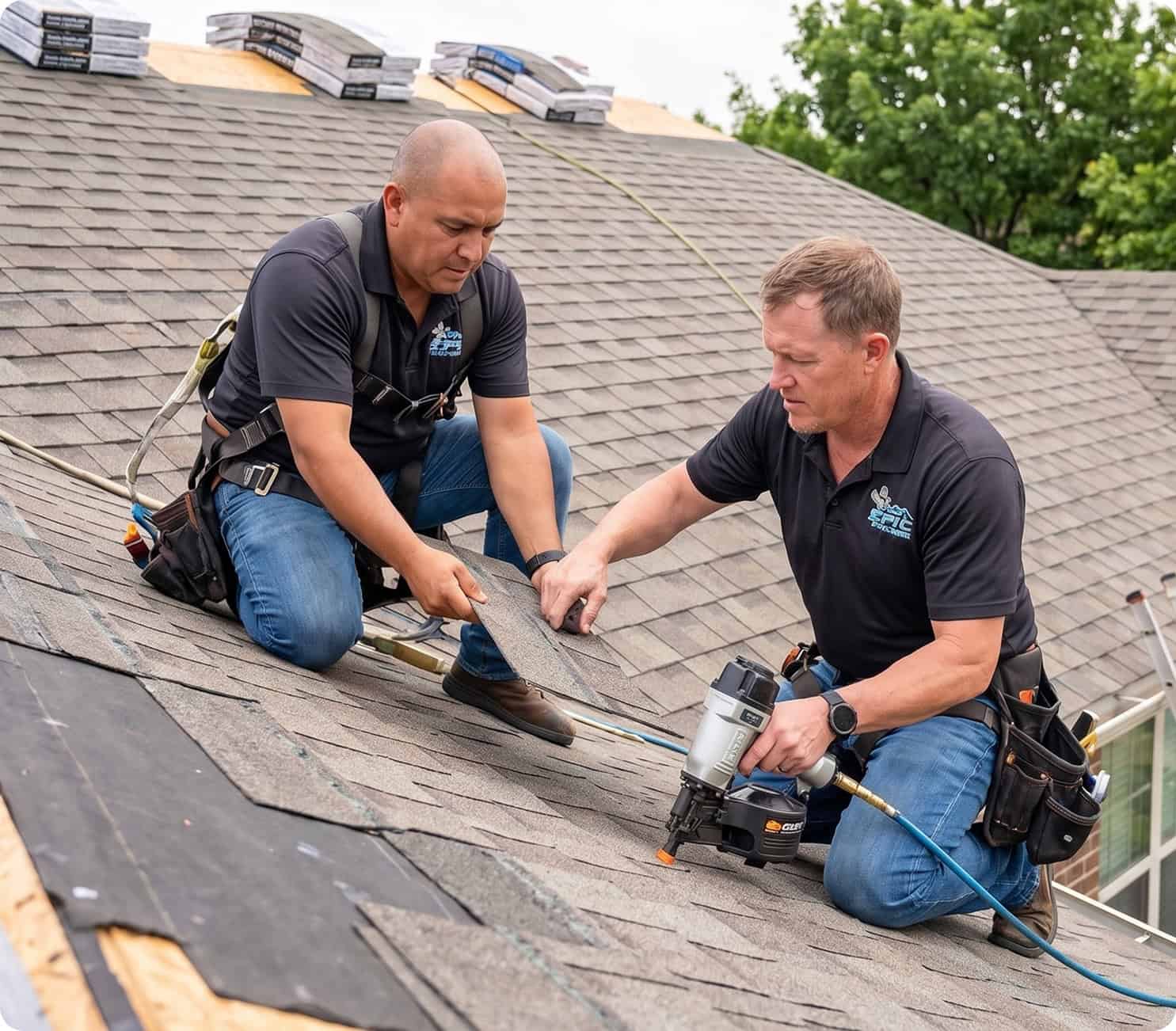
A shingle holds because of where its nails sit, not only how many there are. Nails belong in the manufacturer nail zone, driven flat and flush with the surface. Set them too high and they miss the course below, so that shingle hangs on adhesive alone. Drive them at an angle or sink them through the mat and the head cuts the shingle. Wind finds every one of those shortcuts.
Putting Wind Damage on Record in Fort Worth
On a Fort Worth wind inspection we lift tabs by hand across each slope, photograph the broken seal lines, the creasing and any displaced fasteners, and note which elevation faced the wind. Dates go on the file and the written scope says what the roof needs. The record belongs to you and you decide what to do with it. Policy terms on reporting windows vary, so read your own.