Residential Roofing
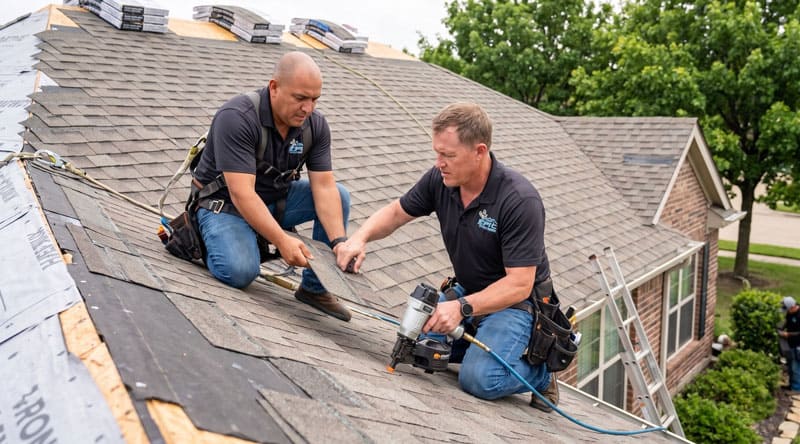
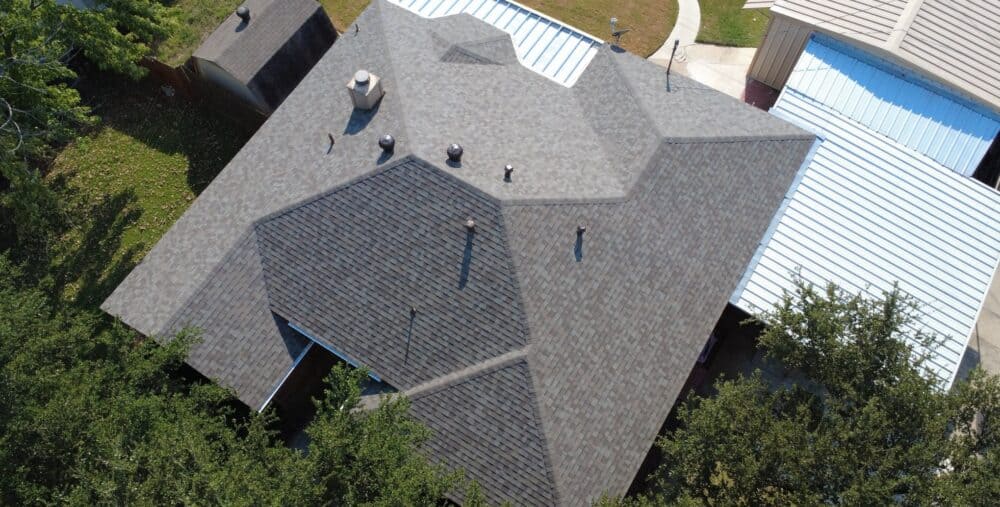
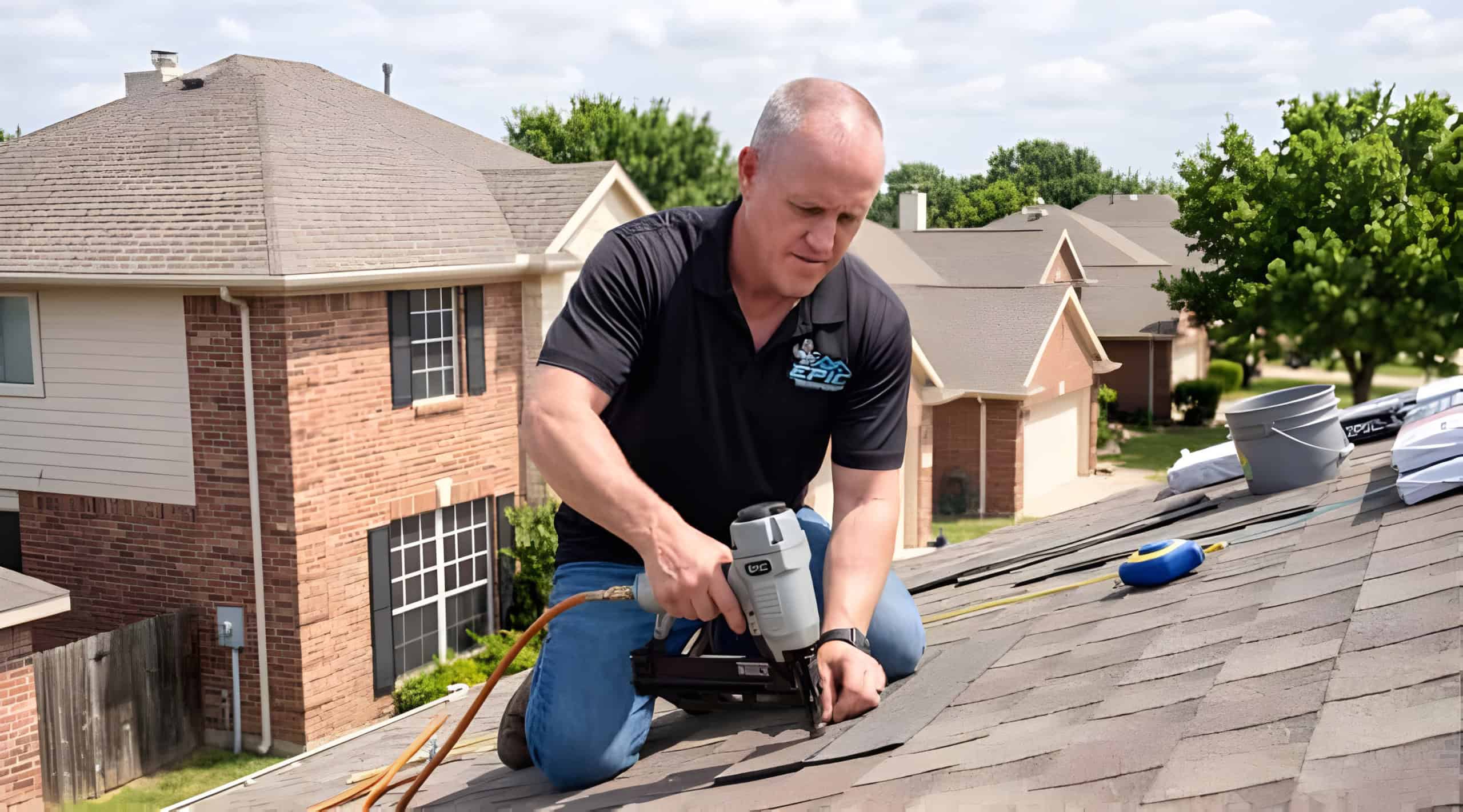
A residential replacement gets new underlayment and new metal at every joint instead of reused pieces.
Learn More

Get a Free Estimate


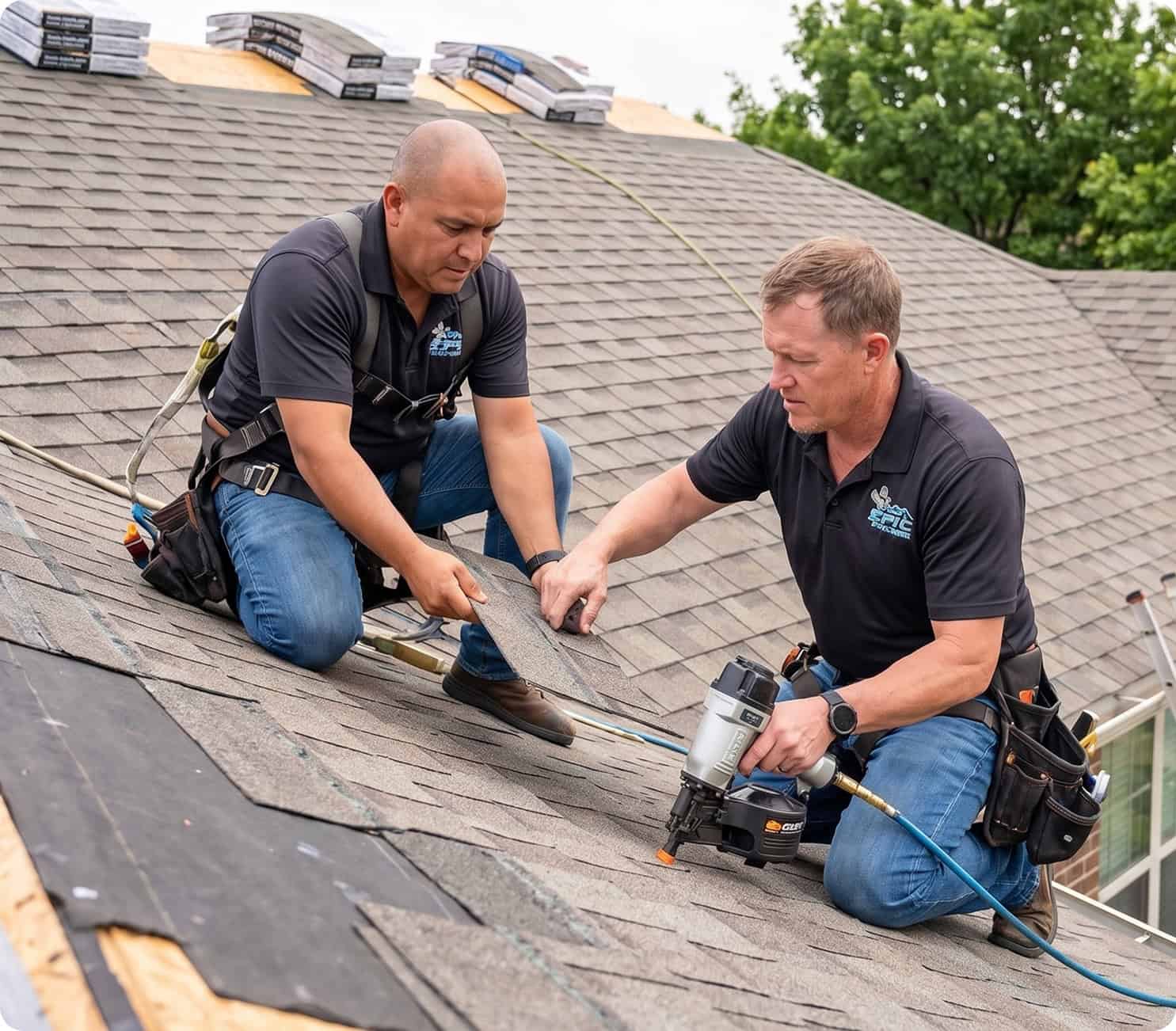
Flashing is a small share of what a roof costs and a large share of how long it lasts. Every chimney, wall, valley, vent pipe and roof edge on a Justin home has a detail behind it, and each one fails in its own way.
Step flashing is a stack of small bent pieces, one for every course of shingle, each lapped over the one below so water steps down the wall and back onto the roof. It only works as a stack. One long strip run up the joint and sealed looks neat but fails in a few years, because nothing stops water tracking behind it. Apron flashing closes the joint where a slope dies into a wall.
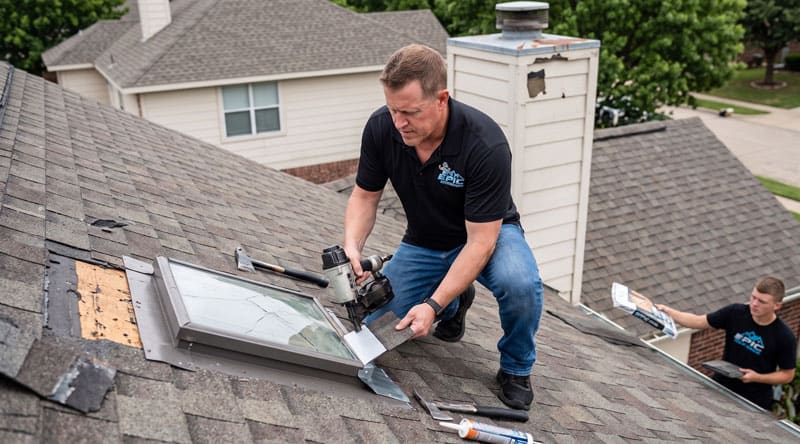
A chimney needs two layers of metal. Base flashing sits on the roof and turns up the masonry. Counter flashing is cut into a mortar joint, bent down over the base and pointed in, so water running down the brick is thrown clear. Where counter flashing was sealed to the face of the brick instead of let into the mortar, that seal opens and the chimney leaks in heavy rain.
Valley metal carries water from two planes at once, so it wears from the middle outward where nobody looks. A pipe boot seals around a vent with a rubber collar that hardens and splits in the sun, often years before the shingles around it are finished. Drip edge is the flashing at the eave and rake that throws water into the gutter rather than behind it. All three are inexpensive parts that leak.
We photograph every flashing detail on a Justin roof, including the sound ones, and mark where water is entering and how far it has traveled. A close image of a lifted counter flashing or a split boot reads clearly to anyone reviewing the file. The record is dated and it is yours. Policies differ on how long you have to act, so read your own terms.