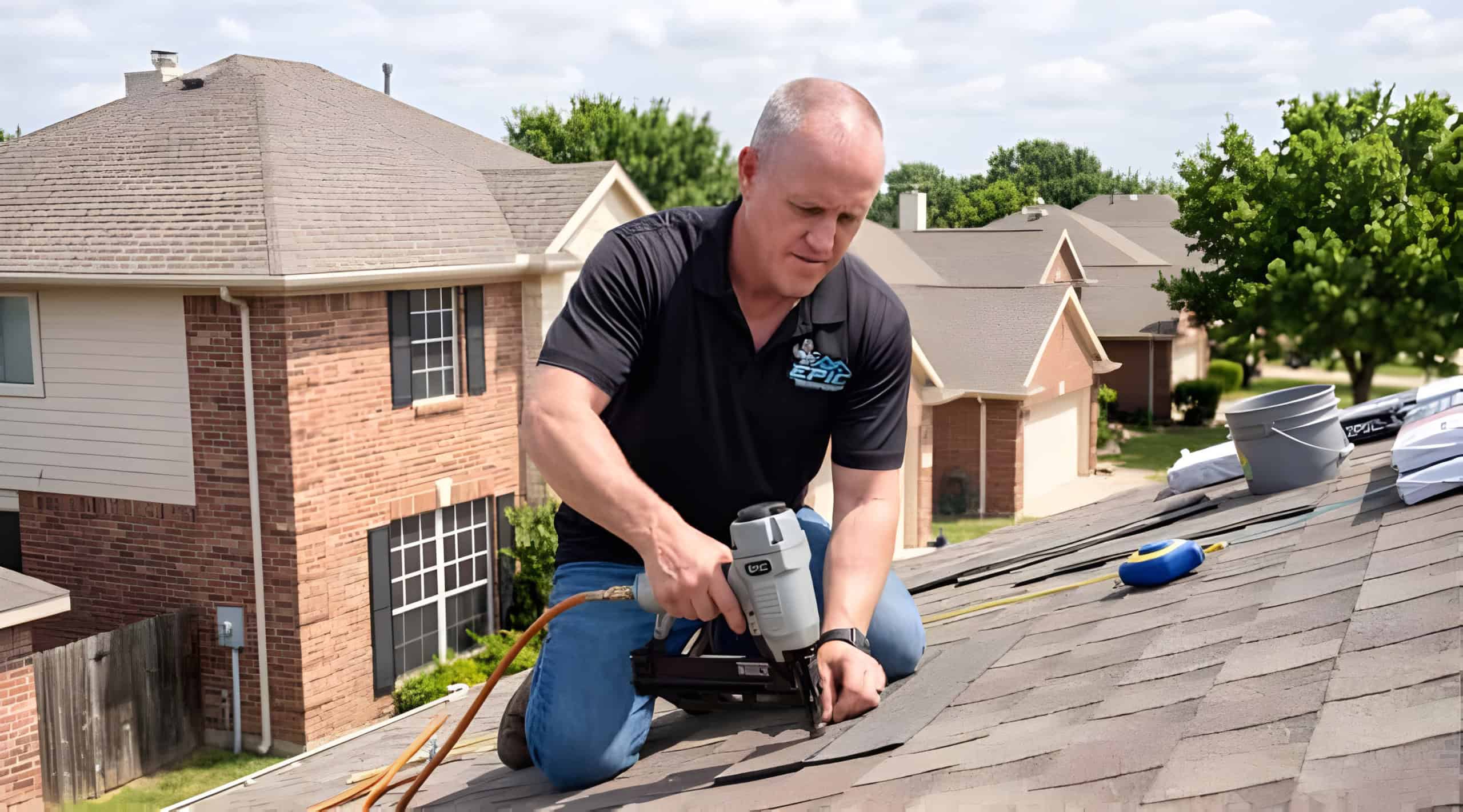
Residential Roofing
Our residential roofing covers shingle, metal, tile, slate and cedar shake here.
Learn More

Get a Free Estimate


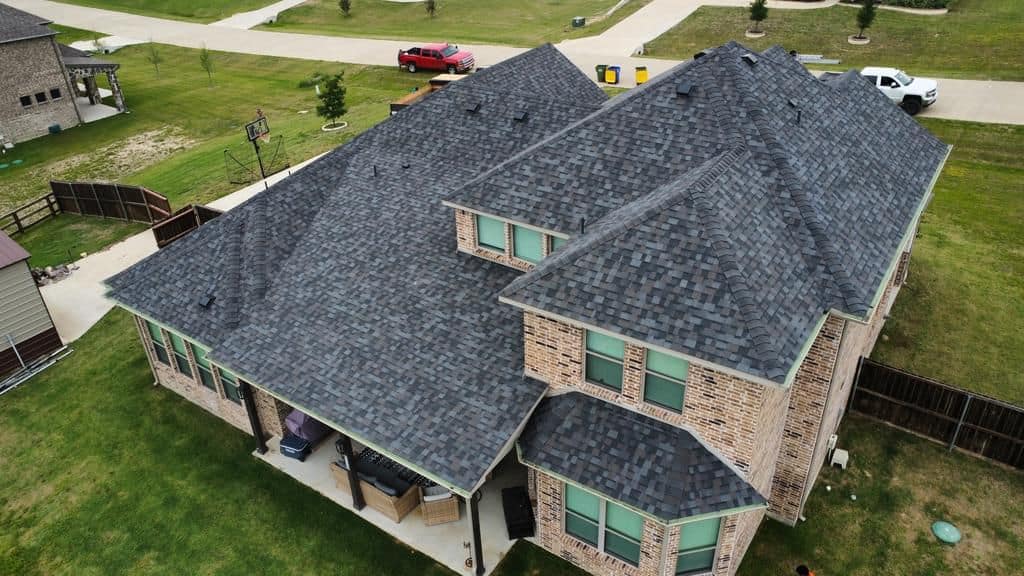
Condensation and leaks leave similar marks and need completely different fixes. One is a hole in the roof. The other is warm wet air meeting a cold surface inside your own attic. Telling the two apart is the first job on a damp callout in Denton County.
Warm air holds more moisture than cold air. When humid attic air touches the underside of cold decking on a winter night, the air at that surface drops below its dew point and the moisture turns into water on the wood. It beads, runs down the nail shanks and drips. By morning it has dried off and left a stain that looks exactly like a roof leak.
Most of it comes from the house below. Bathroom fans and dryer ducts that stop short in the attic instead of terminating outside push warm wet air straight into it. An open attic hatch, unsealed can lights and gaps around plumbing stacks do the same thing more slowly. A damp crawl space feeds it as well. None of that involves the roof at all.
Insulation sits directly under the decking in the coldest part of the assembly. Condensation forming above it drips onto the batts, and insulation holds water the way a sponge does. Wet insulation stops insulating, which makes the decking colder, which makes more condensation. The damp spreads evenly across a wide area instead of running from one point, and that spread is the first clue.
Leaks track to a point. We follow the stain upslope to an entry detail and photograph it. Condensation does not track. It shows as frost or beading across a broad area of decking, rusted nail points over whole bays, and damp that worsens on cold still nights rather than during rain. We record what we find either way and give you the dated file to keep.