

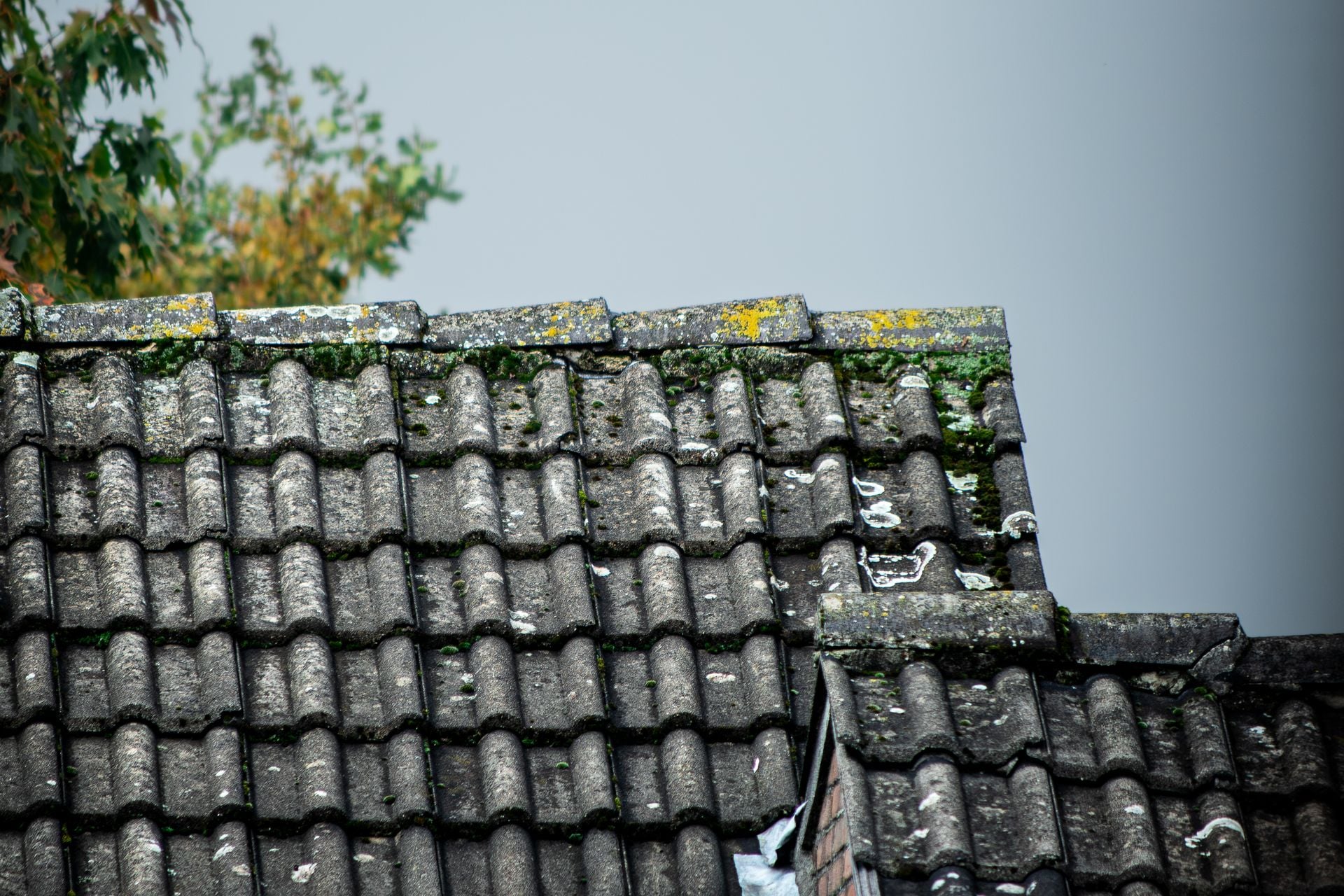
How to Remove Moss From a Roof Without Damaging It
Quick Answer
To remove moss from an asphalt shingle roof, spray it with a 50/50 mix of laundry-strength liquid chlorine bleach and water, let it sit for 15 to 20 minutes, and rinse with low-pressure water before it dries. Loosened moss can then be cleared with a leaf blower or a soft brush stroked downward. Never use a pressure washer on shingles, and protect plants below with water or a cover. Trimming trees and keeping the roof clear of debris helps stop it from coming back.
Moss is not the first thing people picture on a North Texas roof, but we find it regularly on shaded homes in Denton, Corinth, Lantana, and older neighborhoods with mature trees. It tends to grow on north-facing slopes, in valleys, and under live oaks and pecans where the roof stays damp after spring rains. More often, what homeowners call moss turns out to be algae or lichen. Each one is handled a little differently, so the first step is knowing what you have.
Moss, Algae, or Lichen? How to Tell
| Growth | What It Looks Like | Where It Shows Up in North Texas | Risk to the Roof | How to Handle It |
|---|---|---|---|---|
| Moss | Green, fuzzy clumps or mats that are raised above the shingle | Shaded north slopes, valleys, under trees | Moderate to high: holds water and lifts shingle edges | Bleach solution, gentle removal, prevention |
| Algae | Black or dark streaks running down the slope | Common on light-colored shingles across DFW | Low: mostly cosmetic | Bleach solution and low-pressure rinse |
| Lichen | Crusty, flat, gray-green or pale spots that cling tightly | Older roofs, partly shaded areas | Moderate: roots grip granules and can pull them loose | Treat and let it die off, do not scrape |
Black streaks are a more frequent sight on DFW roofs than true moss. They come from algae that feeds on limestone filler in some shingles. They look bad but rarely harm the roof on their own.
Does Moss Damage a Roof?
Yes, if it is left to grow. Moss works like a sponge. It holds water against the shingles long after the rest of the roof has dried, and as clumps grow they can wedge under shingle edges and lift them. That opens a path for wind-driven rain and can break the seal strips that hold shingles down in storms. Over time, trapped moisture can reach the roof deck and cause rot. Moss also sheds into gutters, where it blocks water flow and sends overflow down the fascia.
In our area, moss often dries out and goes dormant in July and August, then turns green again with fall and spring rain. Dormant moss is still there and still holding debris, so summer is not a fix. If you notice lifted or loose shingles around the growth, schedule a roof inspection before you start cleaning.
How to Remove Moss From a Roof: Step by Step
What You Need
- A sturdy extension ladder with a stabilizer, and a helper to hold it
- Rubber-soled shoes, gloves, and eye protection
- A garden pump sprayer
- Laundry-strength liquid chlorine bleach and water
- A garden hose with a low-pressure spray nozzle
- A soft-bristle brush on an extension pole, or a leaf blower
- Plastic sheeting to cover shrubs and flower beds
Steps
- Pick a cool, cloudy, dry day. The solution works better when it does not evaporate right away, and a dry roof is less slippery. Early morning in spring or fall works well in North Texas.
- Protect your landscaping. Water down plants and cover them with plastic sheeting. Rinse them again when you are done.
- Mix the solution. Combine equal parts bleach and water in the pump sprayer.
- Apply from the ladder or the lower edge. Spray the moss and the surrounding area. Avoid walking on the roof when it is wet or treated.
- Let it sit 15 to 20 minutes. Do not let the solution dry completely on the shingles.
- Rinse with low pressure. Use a garden hose, spraying from the top of the slope down so water flows with the shingles, not under them.
- Remove loosened moss gently. Use a leaf blower or a soft brush, always stroking downward. Heavy growth may need a second treatment a few days later.
- Clean the gutters. Clear out moss and granules that washed off so downspouts flow freely.
What Not to Do
- Do not pressure wash asphalt shingles. High pressure strips the granules that protect shingles from UV and can shorten roof life by years.
- Do not scrape or use a wire brush. Scraping tears the shingle surface and breaks seal strips.
- Do not brush upward. Pushing against the shingle lap lifts edges and lets water in.
- Do not nail zinc strips onto an older roof. Retrofitting strips can expose nails or break the seal between shingles, which leads to leaks or wind damage. Strips are a better choice at the time of replacement.
- Do not walk a steep or wet roof. If the roof is steep, two stories, or you are not comfortable on a ladder, hire a roofer.
Moss on Metal and Tile Roofs
Metal and tile roofs collect moss and algae too, but they need a different approach. Chlorine bleach can be harsh on some metal finishes and coatings, so check the panel manufacturer’s cleaning guidance before you use it, and rinse thoroughly. On concrete and clay tile, low pressure is still the rule. High pressure can erode the tile surface and push water past the tiles to the underlayment. Tile is also easy to crack underfoot, so we recommend leaving tile roof cleaning to a professional. If a metal or tile roof looks faded after cleaning, a coating may be an option. See our roof painting page.
How to Keep Moss From Coming Back
- Trim overhanging branches. More sun and airflow help the roof dry after rain. In shaded Denton County yards, this change alone often makes a big difference.
- Keep the roof and valleys clear of leaves. Piles of debris hold moisture and feed new growth.
- Keep gutters flowing. Our gutter cleaning service removes the buildup that keeps roof edges wet.
- Improve attic ventilation. A well-ventilated attic reduces condensation under the deck. Read about attic ventilation in Texas heat.
- Choose algae-resistant shingles at replacement. Many GAF shingles, including Timberline HDZ, come with StainGuard Plus algae protection, which uses time-release copper and carries a 25-year limited warranty against blue-green algae discoloration on qualifying products.
- Add zinc or copper at replacement. Installed correctly during a new roof, metal strips near the ridge release ions with each rain that discourage growth below.
- Schedule regular maintenance. Our roof maintenance visits include debris removal and a check for early growth.
When to Call a Roofer Instead
Call a professional if the moss covers large sections of the roof, if shingles are lifted or missing under the growth, if any part of the roof feels soft, or if the roof is steep or two stories. Moss on an older roof can also be a sign the roof is near the end of its life. Our guides on how long a roof lasts in Texas and signs you need a new roof can help you decide whether to clean, repair, or plan a roof replacement. If moss has already let water in, our roof repair crew can fix the damaged area.
Frequently Asked Questions
What kills moss on a roof?
A 50/50 mix of laundry-strength liquid chlorine bleach and water is the method recommended by the Asphalt Roofing Manufacturers Association for asphalt shingles. Let it sit 15 to 20 minutes, then rinse with low pressure.
Is it safe to pressure wash a roof to remove moss?
No. Pressure washing strips the protective granules from asphalt shingles and can damage tile surfaces. Use a low-pressure garden hose instead.
Will moss die on its own in the Texas summer?
It usually dries out and turns brown, but it is dormant, not dead. It turns green again when fall and spring rains return, and it keeps holding debris and moisture in the meantime.
Is the black staining on my roof moss?
Usually not. Black streaks are typically algae, which is mostly cosmetic. Moss is green, fuzzy, and raised above the shingle surface.
Do zinc strips stop moss?
They can help prevent new growth, but they work well when installed during a roof replacement. Nailing strips onto an existing roof can create leak points.
How often should I clean moss off my roof?
Treat moss as soon as you notice it, then check shaded slopes each spring and fall. Removing debris and trimming trees reduces how often you need to clean.
Need Help With Moss or Roof Damage?
Epic Roofing & Construction is a family-owned, GAF Master Elite roofing contractor in Denton with a BBB A+ rating. If moss has lifted shingles or you are not sure what is growing on your roof, we will take a look and tell you what it needs. Call (972) 798-7874 or contact us online.
Start Your Roofing Project With Confidence Today
Get Started Today