

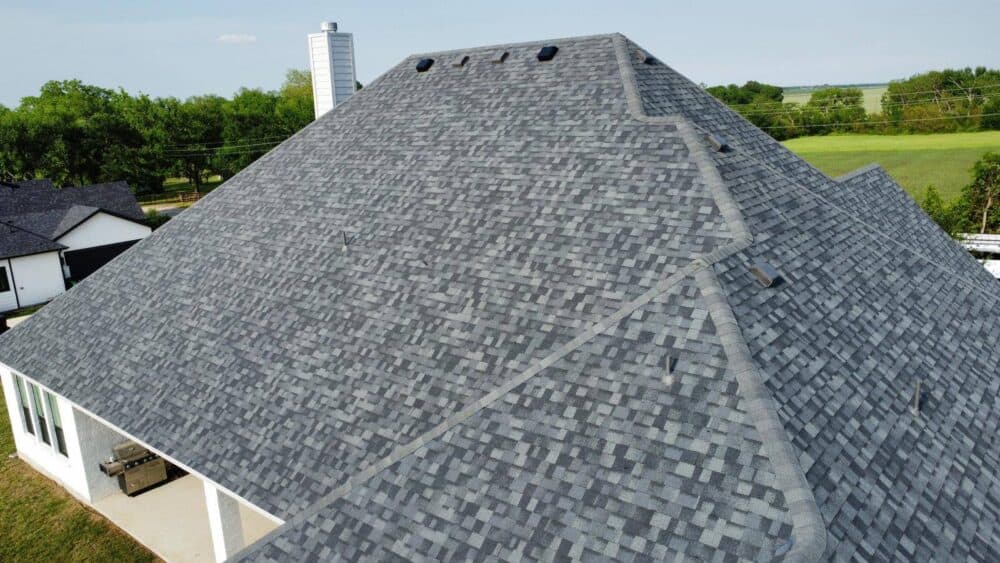
How Long Does a Roof Last in Texas? Lifespan by Material
Quick Answer
In North Texas, an architectural asphalt shingle roof usually lasts about 15 to 25 years, and a 3-tab shingle roof about 12 to 18 years. Standing seam metal roofs commonly last 40 to 60 years or longer, concrete and clay tile 50 years or more (with underlayment replaced sooner), and flat commercial membranes like TPO and EPDM about 15 to 30 years. Heat, UV, hail, and attic ventilation decide where your roof lands within those ranges.
Roof warranties and product labels list numbers like 30 years or “lifetime.” Texas roofs rarely read the label. Between 100-degree summers, hail season, and wide temperature swings, a roof in Denton County works harder than the same roof in a mild climate. Here is what we see on real roofs across North Texas, broken down by material, and what you can do to push your roof toward the long end of its range.
Roof Lifespan by Material in North Texas
| Roofing Material | Typical Rated Lifespan | Realistic Range in North Texas | Main Texas Threat |
|---|---|---|---|
| 3-tab asphalt shingles | 20 to 25 years | 12 to 18 years | UV, wind uplift, hail |
| Architectural asphalt shingles | 25 to 30+ years | 15 to 25 years | Hail, attic heat |
| Class 4 impact-resistant shingles | 25 to 30+ years | 18 to 28 years | Very large hail |
| Standing seam metal | 40 to 70 years | 40 to 60+ years | Sealant and coating wear, hail dents |
| Exposed-fastener metal panels | 20 to 40 years | 20 to 35 years | Fastener washers drying out |
| Concrete tile | 50+ years | 40 to 50+ years (underlayment 20 to 30) | Underlayment aging, cracked tiles |
| Clay tile | 75 to 100 years | 50 to 75+ years (underlayment 20 to 30) | Underlayment aging, foot traffic |
| Slate | 75 to 150 years | 75+ years | Broken slates, flashing wear |
| Cedar shake | 25 to 30 years | 15 to 25 years | Dry heat, splitting, cupping |
| TPO (flat roofs) | 15 to 30 years | 15 to 25 years | UV, seam stress |
| EPDM (flat roofs) | 20 to 30 years | 20 to 25 years | Shrinkage, seam failure |
| PVC (flat roofs) | 20 to 30 years | 20 to 30 years | Punctures, plasticizer loss |
These are typical ranges, not guarantees. A well-installed, well-ventilated roof can beat them. A roof with poor ventilation or a bad install can fall short by a decade.
Why Texas Roofs Age Faster Than the Label Says
Heat and UV
Dark shingles in a Denton summer can reach surface temperatures far above the air temperature. That heat slowly bakes the oils out of asphalt, which makes shingles brittle and causes them to shed the protective granules that block UV. Once granules go, aging speeds up.
Hail
North Texas sees frequent hail, especially from March through June. On June 2, 2026, storm reports logged hail up to 2 inches near The Colony, and quarter-size hail hit near DISH in late May. Hail does not always cause an immediate leak. It can crack the mat inside a shingle or knock loose granules, and the roof fails years early as a result. Our guide to what hail damage looks like on a roof shows the marks to look for.
Temperature Swings
A spring day can swing 30 degrees or more between afternoon and night, and winter freezes still happen. Roofing materials expand and contract every cycle, which loosens fasteners, stresses seams on flat roofs, and wears down sealants on metal.
Wind
Strong straight-line winds from spring storms lift shingle edges and break the seal strips that hold them down. A shingle that has lifted once is more likely to lift again.
Asphalt Shingles: What the Warranty Number Really Means
Asphalt shingles cover the majority of homes in Denton County, so this question comes up on nearly every estimate. A “lifetime” or 30-year shingle warranty mainly covers manufacturing defects. It does not promise the roof will last that long against Texas weather. Wear from heat, storm damage, and installation errors fall under different terms, and some coverage depends on how the roof was installed and registered.
That is why installation quality matters as much as the shingle you pick. As a GAF Master Elite contractor, we install complete roof systems with matching starter strips, ridge caps, leak barrier, drip edge, and balanced attic ventilation. Those parts are also what manufacturers look for when they back the system with their stronger warranties. If you are weighing shingle options, our post on impact-resistant shingles for North Texas homes covers the Class 4 choices.
What Shortens a Roof’s Life
- Poor attic ventilation: A hot, stagnant attic cooks shingles from below. We see this often on homes where soffit vents were painted over or blocked by insulation. Read why attic ventilation is everything in Texas heat.
- Installation shortcuts: Missing drip edge, reused flashing, and incorrect nailing all cut years off a roof. The City of Denton now checks drip edge, flashing, and attic vent clearances during its final roof inspection, which helps, but it does not catch everything.
- Roofing over an old roof: A second layer of shingles traps heat and hides decking problems. A full tear-off gives the new roof a clean start.
- Clogged gutters: Standing water at the roof edge rots decking and fascia. Regular gutter cleaning prevents it.
- Overhanging trees: Branches scrape shingles and shade can hold moisture that feeds moss and algae. See our guide on how to remove moss from a roof.
- Skipped repairs: A few missing shingles left through one storm season can turn into decking damage by the next.
How to Make Your Roof Last Longer
- Schedule an inspection every year and after major storms. A professional roof inspection catches lifted shingles, cracked boots, and hail bruising before they leak.
- Fix small problems quickly. Prompt roof repair costs far less than replacing rotted decking later.
- Keep the attic ventilated. Balanced intake and exhaust vents lower attic temperatures and protect shingles from below.
- Keep gutters and valleys clear. Leaves and debris hold water against the roof.
- Trim back branches. More sun and air on the roof means fewer scrapes and less growth.
- Consider routine maintenance. Our roof maintenance visits cover sealant touch-ups, fastener checks, and debris removal.
How to Tell Where Your Roof Is in Its Life
Age is only part of the picture. A 12-year-old roof that took a direct hit from hail may be in worse shape than a 20-year-old roof that never did. Look for granule buildup in gutters, curling or cracked shingles, dark patches on slopes, and water stains in the attic. Our guide to signs you need a new roof walks through how to tell an old roof from a damaged one.
If your roof is near the end of its range, start planning before a storm forces the decision. Our post on how much a new roof costs in Texas can help you budget, and our roof replacement page explains how we handle the project.
Frequently Asked Questions
How long does a roof last in Texas on average?
For the asphalt shingle roofs found on many Texas homes, plan on roughly 15 to 25 years for architectural shingles and 12 to 18 years for 3-tab. Metal and tile roofs last much longer, often 40 years or more.
Is a 20-year-old roof too old in Texas?
Not automatically, but a 20-year-old asphalt shingle roof in North Texas is close to the end of its typical range. Get it inspected, especially after hail season, so you can plan a replacement on your schedule instead of after a leak.
How long does a metal roof last in Texas?
Standing seam metal roofs commonly last 40 to 60 years or more in North Texas. Exposed-fastener panels last about 20 to 35 years, and their fastener washers may need replacement sooner. Coatings can extend metal roof life. See our roof painting page for details.
Do impact-resistant shingles last longer?
Class 4 impact-resistant shingles are built to resist cracking from hail, so they often hold up longer in hail-prone areas like Denton County. They can still be damaged by very large hail, and they still need good ventilation to reach their full life.
Does hail shorten a roof’s life even without a leak?
Yes. Hail can bruise shingles, crack the mat, and strip granules without causing a leak right away. Those weak spots age faster and often start leaking a few seasons later.
Does roof color affect how long a roof lasts?
It can. Lighter, reflective colors absorb less heat, which reduces thermal stress on the roof and attic. Our post on choosing roof colors for the Texas sun explains the tradeoffs.
Find Out How Much Life Your Roof Has Left
Epic Roofing & Construction is a family-owned, GAF Master Elite roofing contractor in Denton with a BBB A+ rating and a 10-year workmanship warranty. We will inspect your roof, show you photos of what we find, and give you a straight answer on how many years it has left. Call (972) 798-7874 or schedule an inspection online.
Start Your Roofing Project With Confidence Today
Get Started Today